
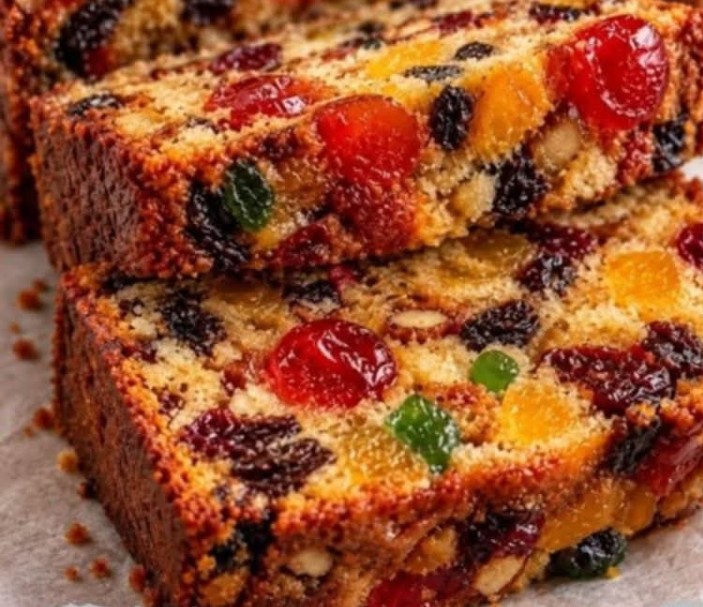
Christmas Fruitcake Loaf – A Traditional Holiday Favorite
Introduction
Christmas Fruitcake Loaf is a timeless holiday dessert filled with sweet dried fruits, crunchy nuts, warm spices, and a rich buttery cake. Every slice is packed with festive flavors, making it the perfect treat to serve during Christmas celebrations, family gatherings, holiday parties, or cozy winter afternoons.
This homemade fruitcake loaf has everything people love about traditional Christmas baking. The dried fruits add natural sweetness and chewiness, the nuts provide a satisfying crunch, and the buttery cake holds everything together in a soft, moist, and flavorful loaf.
One of the best things about this recipe is that it can be prepared ahead of time. In fact, allowing the loaf to rest overnight helps the flavors develop, making every slice even more delicious.
Whether you serve it with a cup of coffee, tea, or hot chocolate, this Christmas Fruitcake Loaf is a wonderful way to bring warmth and tradition to your holiday table.
Ingredients
For the Fruitcake Loaf:
- 1 1/2 cups mixed dried fruit (raisins, currants, chopped dates, and candied peel)
- 1/2 cup chopped walnuts or pecans
- 1/2 cup unsalted butter, softened
- 1 cup packed brown sugar
- 3 large eggs, room temperature
- 1 3/4 cups all-purpose flour
- 1 teaspoon baking powder
- 1/4 teaspoon baking soda
- 1/2 teaspoon salt
- 1 teaspoon ground cinnamon
- 1/4 teaspoon ground nutmeg
- 1 teaspoon vanilla extract
- 1/3 cup orange juice
- 2 tablespoons milk
- 1 tablespoon orange zest
Optional Fruit Preparation:
- 2 tablespoons orange juice or apple juice for soaking the dried fruit.
- 1 tablespoon flour for coating the dried fruit.
Optional Topping:
- 2 tablespoons apricot jam
- 1 tablespoon warm water
- A few extra chopped nuts
- A little powdered sugar for decoration
Instructions
Step 1: Prepare the Dried Fruit
Place the mixed dried fruit in a medium-sized bowl.
Add 2 tablespoons of orange juice or apple juice and stir until the fruit is lightly coated.
Allow the fruit to soak for approximately 20–30 minutes. This helps soften the fruit and makes the finished loaf wonderfully moist.
If the fruit looks very wet, drain any excess liquid before adding it to the batter.
Step 2: Prepare the Baking Pan
Preheat your oven to 325°F (165°C).
Grease a standard 9 x 5-inch loaf pan with butter or cooking spray.
Line the bottom and sides with parchment paper, leaving a little overhang to make removing the finished loaf easier.
Set the prepared pan aside.
Step 3: Combine the Dry Ingredients
In a medium bowl, whisk together the flour, baking powder, baking soda, salt, cinnamon, and nutmeg.
Mix until everything is evenly distributed.
Set aside.
Step 4: Cream the Butter and Sugar
In a large mixing bowl, beat the softened butter and brown sugar together using an electric mixer.
Continue mixing for approximately 3–4 minutes until the mixture becomes light, fluffy, and creamy.
This step is important because incorporating air into the butter helps create a softer cake texture.
Step 5: Add the Eggs
Add the eggs one at a time, beating well after each addition.
Scrape down the sides of the bowl as needed.
Add the vanilla extract and orange zest, then mix until combined.
The batter should look smooth and creamy.
Step 6: Add the Dry and Wet Ingredients
Gradually add the flour mixture to the butter mixture in three additions.
Alternate with the orange juice and milk.
Begin and finish with the dry ingredients.
Mix on low speed just until everything is incorporated.
Avoid overmixing because this can make the loaf dense.
Step 7: Add the Fruits and Nuts
If desired, toss the soaked dried fruit with 1 tablespoon of flour.
This can help distribute the fruit throughout the batter.
Gently fold the dried fruit and chopped walnuts or pecans into the batter using a spatula.
Make sure the fruit and nuts are evenly distributed.
Step 8: Fill the Loaf Pan
Pour the prepared batter into the lined loaf pan.
Spread it evenly with a spatula.
Smooth the top and gently tap the pan on the counter to remove any large air pockets.
Step 9: Bake the Fruitcake
Place the loaf pan in the preheated oven.
Bake for approximately 65–80 minutes.
Because fruitcakes are rich and dense, they need a little extra baking time.
Check the center with a wooden toothpick. It should come out clean or with a few moist crumbs, but without wet batter.
If the top begins browning too quickly, loosely cover it with aluminum foil during the final part of baking.
Step 10: Cool the Loaf
Remove the loaf from the oven and allow it to cool in the pan for approximately 15–20 minutes.
Carefully lift it out using the parchment paper.
Transfer it to a wire rack and allow it to cool completely before slicing.
Step 11: Add the Optional Glaze
For a beautiful glossy finish, combine the apricot jam with warm water in a small saucepan.
Heat gently until smooth.
Brush the glaze over the cooled fruitcake loaf.
You can also sprinkle extra chopped nuts over the top for a beautiful holiday presentation.
Cooking Methods and Techniques
1. Soaking Method
Soaking the dried fruit before baking helps soften raisins, currants, dates, and candied peel. It also allows the fruit to absorb additional flavor from the orange or apple juice.
2. Creaming Method
Creaming butter and brown sugar incorporates air into the batter. This creates a lighter texture and helps balance the density of the dried fruit.
3. Alternating Mixing Method
Adding the dry ingredients alternately with the liquids helps maintain a smooth batter and prevents excessive mixing.
4. Folding Method
Gently folding the dried fruit and nuts into the batter prevents the ingredients from breaking apart and helps distribute them evenly.
5. Slow Baking Method
Baking at 325°F allows the center of the dense fruitcake to cook without excessively browning the outside.
History of Christmas Fruitcake
Fruitcake has a long history that dates back centuries. Early versions of fruitcakes were made with dried fruits, nuts, honey, and grains because these ingredients could be stored for extended periods.
Ancient Romans prepared fruit-based cakes using ingredients such as raisins, pine nuts, and other preserved fruits.
Over time, fruitcakes became popular throughout Europe, particularly in Britain, where dried fruits and spices were treasured ingredients in festive baking.
During the Christmas season, fruitcake became a special dessert associated with family traditions, celebrations, and hospitality.
As recipes traveled across countries and generations, different families developed their own versions using local fruits, nuts, spices, and sweeteners.
Today, Christmas Fruitcake remains a beloved holiday classic, especially when homemade and shared with loved ones.
Formation and Texture of the Fruitcake Loaf
The secret to a delicious Christmas Fruitcake Loaf is the balance between the cake batter and the generous amount of dried fruit.
The butter and brown sugar create a rich foundation, while the eggs provide structure and help hold everything together.
The flour and baking powder give the loaf its shape and texture.
The dried fruits become soft and tender during baking, creating little pockets of sweetness throughout the cake.
The chopped nuts add a pleasant crunch that contrasts beautifully with the soft crumb.
The orange juice and zest bring a gentle citrus flavor that complements the sweetness of the raisins, dates, currants, and candied peel.
When baked properly, the finished loaf should have a golden-brown crust, a moist interior, and beautiful colorful pieces of fruit in every slice.
Tips for the Perfect Christmas Fruitcake
- Use good-quality dried fruit for the best flavor.
- Soak the fruit before baking to prevent it from becoming too dry.
- Bring the butter and eggs to room temperature before mixing.
- Avoid overmixing the batter after adding the flour.
- Chop large dried fruits into smaller pieces for even distribution.
- Cover the loaf loosely with foil if the top browns too quickly.
- Allow the loaf to cool completely before slicing.
- Store the fruitcake in an airtight container to maintain its moisture.
- For deeper flavor, prepare it one day before serving.
- Use a serrated knife to cut neat slices without crushing the fruit.
Storage Instructions
At Room Temperature: Store the completely cooled fruitcake in an airtight container for up to 3–4 days in a cool environment.
In the Refrigerator: Wrap the loaf tightly in plastic wrap or place it in an airtight container. Refrigerate for up to one week.
In the Freezer: Wrap individual slices or the entire loaf tightly in plastic wrap, followed by aluminum foil. Freeze for up to 3 months for best quality.
To serve, thaw overnight in the refrigerator or allow individual slices to come to room temperature.
Serving Suggestions
Christmas Fruitcake Loaf is delicious on its own, but there are many wonderful ways to serve it.
- With a warm cup of coffee.
- Alongside freshly brewed tea.
- With a little salted butter spread over each slice.
- With whipped cream for a special dessert.
- With vanilla ice cream.
- With a drizzle of honey or apricot glaze.
- As part of a Christmas dessert platter with cookies and candies.
For an extra-special holiday breakfast, lightly toast a slice and serve it with butter.
Variations to Try
Traditional Spiced Fruitcake: Add a little ground ginger, cloves, and allspice for a deeper Christmas flavor.
Citrus Christmas Fruitcake: Add extra orange zest, lemon zest, and chopped candied orange peel.
Pecan Christmas Loaf: Replace the walnuts with chopped pecans for a rich, buttery crunch.
Tropical Fruitcake: Add chopped dried pineapple, mango, and coconut for a tropical variation.
Chocolate Fruitcake: Fold in 1/2 cup of dark chocolate chips for a delicious chocolate twist.
Festive Glazed Fruitcake: Brush the cooled loaf with apricot glaze and decorate with additional candied fruit and nuts.
Conclusion
This Christmas Fruitcake Loaf is more than just a holiday dessert. It is a celebration of tradition, homemade goodness, and the wonderful memories created around the family table.
With its buttery texture, sweet dried fruits, crunchy nuts, and delicate holiday spices, every slice offers a comforting taste of Christmas.
It is easy to prepare, beautiful to serve, and perfect for making ahead of busy holiday celebrations.
Whether you are continuing an old family tradition or starting a new one, this fruitcake loaf deserves a place in your Christmas baking collection.
For the Lovers of Homemade Christmas Desserts
If you love traditional holiday baking, this Christmas Fruitcake Loaf is a recipe worth keeping.
It is especially wonderful for people who enjoy old-fashioned cakes, homemade treats, dried fruits, crunchy nuts, and comforting seasonal flavors.
Bake one for your family, prepare another to share with friends, or wrap a loaf beautifully as a homemade Christmas gift.
Some of the best holiday memories begin with a simple homemade recipe, a warm kitchen, and a delicious cake waiting to be shared.