
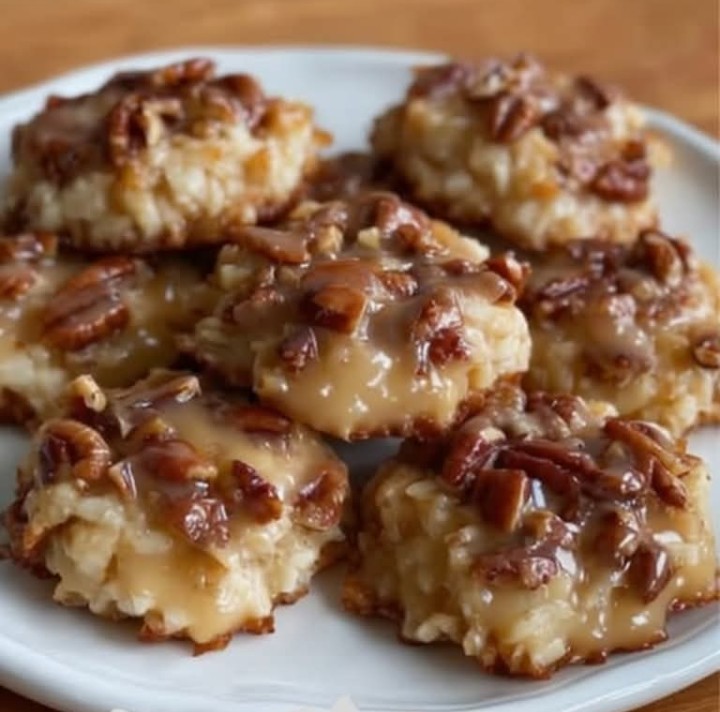
No-Bake Pecan Coconut Praline Cookies
Introduction
There are some recipes that are more than just something sweet to eat. They carry memories, family traditions, and the comforting feeling of being gathered together in the kitchen. These No-Bake Pecan Coconut Praline Cookies are exactly that kind of treat.
This recipe brings together the rich flavor of butter, the deep sweetness of brown sugar, crunchy toasted pecans, and chewy coconut in a simple stovetop cookie that requires no oven. The mixture comes together in one saucepan, then is spooned onto wax paper or parchment paper to cool and set.
The result is a wonderfully old-fashioned praline-style cookie with a glossy coating, crisp edges, a tender chewy center, and plenty of pecans and coconut throughout. They are especially wonderful during the Christmas season, but they are simple enough to make whenever a quick homemade dessert is needed.
Ingredients
For the Cookies
- 1 cup granulated sugar
- 1 cup packed light brown sugar
- 1/2 cup unsalted butter
- 1/2 cup evaporated milk
- 1 teaspoon vanilla extract
- 1 1/2 cups sweetened shredded coconut
- 1 1/2 cups finely chopped pecans
- 1/4 teaspoon salt
Optional Additions
- 1/2 teaspoon ground cinnamon
- 1/4 teaspoon almond extract
- 1/2 cup additional toasted pecans for extra crunch
- 1/2 cup additional coconut for a more pronounced coconut flavor
Preparing the Pecans
For the best flavor, toast the pecans before making the cookies. Place the chopped pecans in a dry skillet over medium-low heat and cook for several minutes, stirring frequently.
The pecans should become fragrant and lightly toasted, but they should not be allowed to burn. Once toasted, transfer them to a plate and let them cool.
This small step makes a noticeable difference. Toasting brings out the natural oils in the pecans and gives the finished cookies a deeper, richer flavor.
Instructions
Step 1: Prepare the Baking Surface
Line two large baking sheets, trays, or a clean countertop with parchment paper or wax paper.
Make sure the surface is ready before beginning the praline mixture because once the mixture reaches the proper consistency, you will want to work quickly.
Step 2: Combine the Sugar Mixture
Place the granulated sugar, brown sugar, butter, evaporated milk, and salt in a medium heavy-bottomed saucepan.
Set the saucepan over medium heat and stir continuously as the butter melts and the sugars begin to dissolve.
Step 3: Bring the Mixture to a Boil
Continue stirring until the mixture comes to a full, steady boil.
Once it reaches a boil, allow it to cook for approximately 3 to 4 minutes, stirring frequently.
The mixture should become smooth, glossy, and slightly thickened. Avoid cooking it for too long because an overly cooked mixture can become dry or crumbly instead of soft and chewy.
Step 4: Add the Flavoring
Remove the saucepan from the heat.
Immediately stir in the vanilla extract. If using almond extract or cinnamon, add them at this stage as well.
Stir until everything is evenly incorporated.
Step 5: Add the Coconut and Pecans
Add the shredded coconut and toasted chopped pecans to the hot praline mixture.
Stir thoroughly until the coconut and pecans are completely coated in the glossy sugar mixture.
The mixture should be thick enough to hold its shape when dropped onto the prepared surface.
Step 6: Form the Cookies
Using a tablespoon or small cookie scoop, drop portions of the mixture onto the prepared parchment or wax paper.
Leave a little space between each cookie.
If desired, gently shape each mound with the back of the spoon while the mixture is still warm.
Step 7: Allow Them to Set
Leave the cookies at room temperature for approximately 30 to 60 minutes, or until the praline coating has completely set.
They should become firm on the outside while remaining slightly chewy inside.
Do not refrigerate them immediately unless necessary, because allowing them to cool naturally helps the praline coating set properly.
Method
The secret to these cookies is the praline base.
The sugars, butter, and evaporated milk are heated together until they reach a boiling point. This creates the rich caramel-like coating that eventually surrounds the coconut and pecans.
The mixture should be cooked long enough to thicken but not so long that it becomes hard and brittle. Once removed from the heat, vanilla is added for flavor, followed by the coconut and toasted pecans.
Because there is no flour, eggs, or traditional cookie dough, these treats are entirely dependent on the sugar mixture for their structure. As the praline mixture cools, it firms around the pecans and coconut, creating a cookie that can be picked up once fully set.
The History and Tradition
Praline-style sweets have a long history, particularly in Southern American cooking. Traditional pralines are known for their combination of sugar, butter, milk or cream, and pecans, producing a rich confection with a characteristic caramelized sweetness.
Over generations, home cooks adapted praline techniques into simpler desserts, including cookies and no-bake treats. Coconut became a popular addition because its chewy texture contrasts beautifully with crunchy pecans and creamy sugar-based coatings.
Recipes like this became especially popular for holidays because they could be prepared without taking up valuable oven space. During Christmas gatherings, a saucepan, a spoon, and a sheet of wax paper were often all that was needed to create a homemade treat for a dessert tray.
That simplicity is part of what makes these cookies so special. They feel old-fashioned without being difficult.
Formation and Texture
The formation of the cookies is simple but important.
The hot praline mixture should be thick enough to hold the pecans and coconut together, but still soft enough to scoop easily. If the mixture spreads too much when placed on the parchment, it may need a little more cooling before forming additional cookies.
If the mixture becomes too firm in the saucepan, return it to very low heat for a short time and stir gently until it becomes workable again.
Once formed, the cookies gradually develop their final texture as they cool.
The outside becomes firm and slightly glossy, while the center remains pleasantly chewy. The toasted pecans provide a satisfying crunch, while the coconut adds a soft, slightly chewy texture.
Tips for Perfect Cookies
Use Fresh Pecans
Fresh pecans provide a much better flavor than old or stale nuts. Toasting them lightly before adding them to the mixture makes them even more flavorful.
Do Not Rush the Boiling Stage
The sugar mixture needs to reach a proper boil so that the cookies will set correctly. However, cooking it excessively can result in a dry or overly hard cookie.
Prepare Everything Before Cooking
Have the parchment paper, cookie scoop, pecans, and coconut ready before you start. The mixture becomes thicker as it cools, so preparation makes the process much easier.
Stir Thoroughly
Make sure every piece of coconut and pecan is coated with the praline mixture. This gives the cookies their characteristic texture and helps them hold together.
Let Them Cool Completely
The cookies may look soft immediately after being formed. Give them enough time to cool and set before moving them.
Variations
Extra-Pecan Version
If you love pecans, increase the amount to 2 cups. This creates a crunchier cookie with a stronger roasted-nut flavor.
Extra-Coconut Version
For coconut lovers, increase the shredded coconut to 2 cups. The finished cookies will have a softer, chewier texture and a more noticeable coconut flavor.
Chocolate Version
For a chocolate variation, stir a small amount of unsweetened cocoa powder into the sugar mixture before adding the coconut and pecans.
Cinnamon-Pecan Version
Add 1/2 teaspoon of ground cinnamon to the boiling sugar mixture for a warm holiday flavor.
Almond-Coconut Version
Add a small amount of almond extract along with the vanilla. Almond and coconut pair especially well with toasted pecans.
Storage
Once completely cooled, store the cookies in an airtight container at room temperature.
Place parchment or wax paper between layers if you are stacking them.
They can generally be kept at room temperature for several days. For longer storage, they may also be refrigerated in a sealed container, although bringing them back to room temperature before serving gives them their best texture.
Serving Ideas
These cookies are ideal for Christmas cookie trays, holiday parties, family gatherings, bake sales, potlucks, and homemade gift boxes.
Arrange them alongside traditional cookies, fudge, pralines, or other holiday sweets for a beautiful dessert assortment.
They are also excellent with coffee, tea, hot chocolate, or a glass of cold milk.
Because they require no oven, they are especially useful when you need a homemade dessert at the last minute.
For Pecan Lovers
If you are the kind of person who believes a dessert can never contain too many pecans, this recipe is easy to customize.
Use extra toasted pecans and chop some pieces larger than others. The smaller pieces blend into the praline coating, while the larger pieces provide bursts of crunch in every bite.
The combination of toasted pecans, buttery caramel-like sweetness, and chewy coconut makes every bite rich without requiring a complicated recipe.
For Coconut Lovers
If coconut is your favorite part, increase the coconut slightly and use finely shredded sweetened coconut.
The coconut absorbs some of the praline mixture while still maintaining its chewy texture. Combined with toasted pecans, it creates a wonderful contrast between soft, chewy, and crunchy.
Conclusion
No-Bake Pecan Coconut Praline Cookies are the kind of dessert that proves you do not need an oven or a complicated ingredient list to make something memorable.
With butter, sugar, evaporated milk, toasted pecans, and coconut, you can create a rich homemade treat in a single saucepan. The praline coating becomes glossy and firm as it cools, while the pecans and coconut provide the texture that makes every bite special.
Most importantly, this is the kind of recipe that can become part of your own family tradition. Make a batch during the holidays, place them on a tray, and let the smell of toasted pecans and buttery sweetness bring everyone into the kitchen.
Whether you prefer them loaded